Bengaluru
08042781646
+917406555511

Products

68179d65be22ee500d53ff54 Card 2

product image
FITTINGS

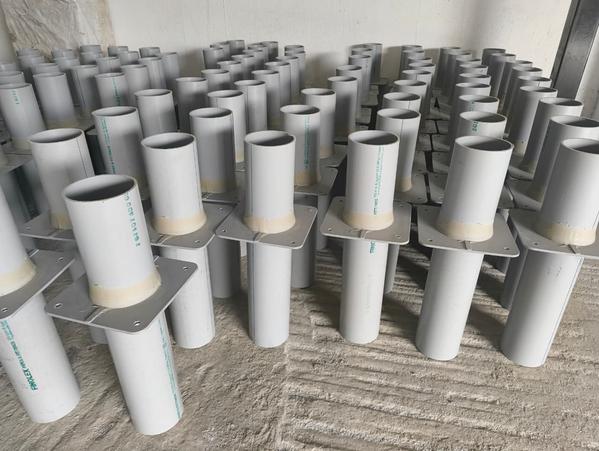
✅ PVC Puddle Flange – Applications A PVC puddle flange is a specialized fitting designed to seal around pipes that pass through concrete walls, slabs, tanks, or foundations, preventing water ingress or leakage at the entry point. It acts as a barrier to water migration along the external surface of the pipe. 🏗️ 1. Underground & Overhead Water Tanks Use: Prevents leakage where inlet/outlet PVC pipes pass through the tank wall or base. Why? Ensures watertight seal around pipe penetration Avoids structural damage due to seepage 🚿 2. Basement & Foundation Plumbing Use: Where pipes pass through concrete foundations or retaining walls. Why? Blocks groundwater or rainwater from seeping through pipe holes Enhances waterproofing of underground structures 🛠 3. Manholes and Inspection Chambers Use: Entry/exit points for pipes in concrete manholes. Why? Ensures gas- and water-tight pipe entries Reduces infiltration/exfiltration in sewerage systems 🚰 4. Water Retaining Structures Use: Dams, reservoirs, swimming pools, STP/ETP tanks. Why? Provides watertight pipe penetration Corrosion-resistant in chemically active environments 🏢 5. High-Rise Building Drainage Systems Use: Pipes crossing floor slabs or water retaining cores. Why? Prevents water movement between floors or shafts Used in combination with waterproofing membranes 🌊 6. Sewage and Drainage Pumping Stations Use: At pipe inlets/outlets in wet wells or sump pits. Why? Maintains seal against pressurized or standing water 🔧 How a PVC Puddle Flange Works It is installed during concreting, with the flange collar embedded into the concrete structure. The flange blocks water that may travel along the pipe’s outer wall. Sealing is often improved with solvent cement, rubber gaskets, or external waterproofing membranes. ✅ Key Benefits of PVC Puddle Flanges 💧 Watertight seal between pipe and concrete 🧪 Corrosion- and chemical-resistant 🧱 Compatible with PVC, HDPE, and concrete structures 🔩 Easy to install in pre- or post-concreting 🔇 Prevents both water seepage and odor leakage

68179d65be22ee500d53ff54 Card 2

product image
FITTINGS

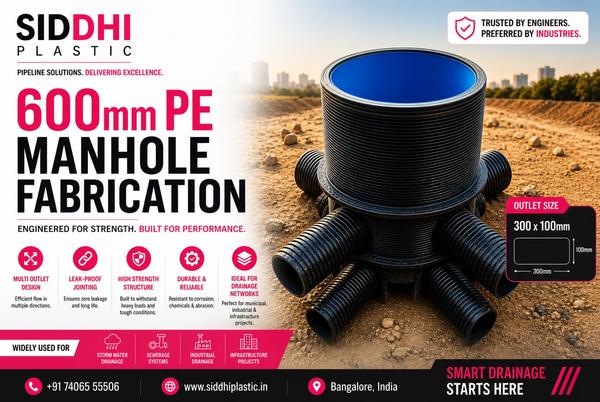
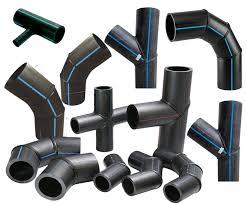
✅ HDPE Fabricated Fittings – Applications HDPE (High-Density Polyethylene) fabricated fittings are custom or semi-custom fittings created by welding, extrusion, or machining HDPE pipe segments or components. They are widely used when standard molded fittings don’t meet size, geometry, or complexity requirements. These fittings are crucial in piping systems demanding chemical resistance, flexibility, and durability, especially in large diameter pipelines and specialized industrial applications. 🏭 1. Industrial Process Piping Use: Transfer of chemicals, slurries, and industrial fluids. Industries: Chemical plants, mining, food processing. Why HDPE? High chemical and abrasion resistance Ability to fabricate complex geometries (e.g., reducers, bends, tees) Leak-free joints via fusion welding 💧 2. Water Supply & Distribution Use: Large-diameter potable water mains and secondary distribution lines. Why? Corrosion-free, low maintenance Fabricated fittings allow customized bends and junctions for complex pipeline routing 🚰 3. Sewerage & Wastewater Systems Use: Gravity and pressure sewer pipelines. Why? Smooth bore reduces friction and blockages Large diameter fabricated fittings enable easy connection to manholes, pumping stations 🛤 4. Gas Distribution Networks Use: Fabricated fittings for gas pipelines requiring complex routing or large sizes. Why? HDPE’s flexibility and strength ensure pipeline integrity Custom fabrication accommodates field-specific needs 🛢 5. Mining and Slurry Transport Use: Pipelines for transporting abrasive slurries and tailings. Why? High abrasion resistance Fabricated fittings reduce wear points and improve flow 🚜 6. Agricultural Irrigation Systems Use: Large diameter mainlines and manifold systems. Why? Durable and resistant to UV and chemicals Fabricated fittings tailor irrigation layouts to terrain 🏗 7. Infrastructure Projects Use: Stormwater drainage, culverts, and tunnels. Why? Fabricated fittings can handle large diameter pipes for heavy-duty applications Resistant to soil chemicals and physical loads

68179d65be22ee500d53ff54 Card 2

product image
FITTINGS

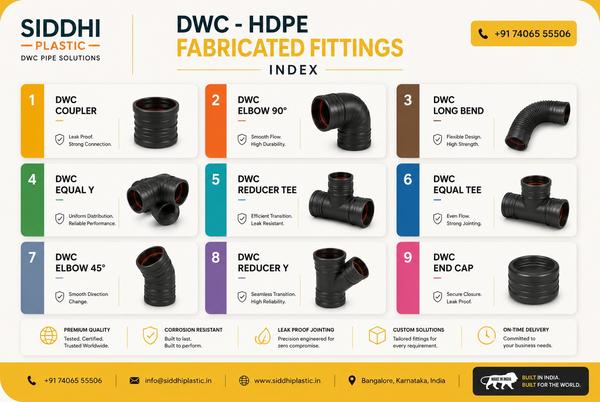
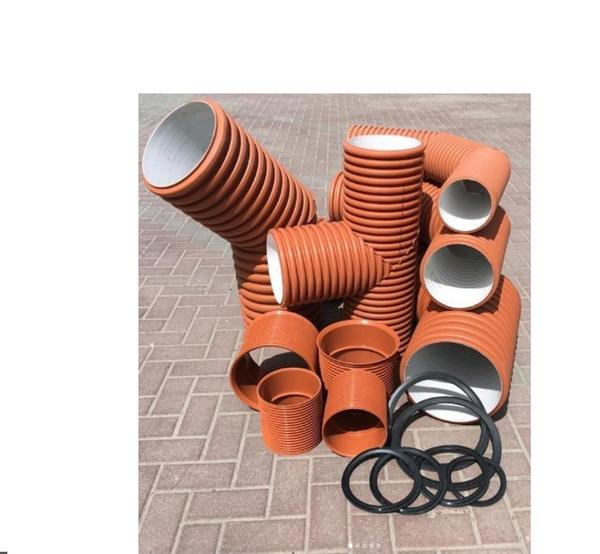
✅ DWC (Double Wall Corrugated) Fabricated Fittings – Applications DWC fabricated fittings are specially made (usually by thermal welding, extrusion, or mechanical joining) from DWC pipes, which have a corrugated outer wall for strength and a smooth inner wall for flow efficiency. Since standard molded fittings are not always available in DWC configurations—especially for large diameters or custom site needs—fabricated fittings are used in drainage and ducting systems to create bends, branches, or transitions. 🛣 1. Road & Highway Drainage Systems Use: Stormwater and subsoil drainage under roads, medians, or embankments. Why Fabricated Fittings? Enables direction changes, tees, and reducers where molded parts aren’t available Quick customization during road development projects 🚧 2. Underground Cable Ducting (Electrical & Telecom) Use: Protective ducting for power and fiber optic cables. Applications: Road crossings Utility corridors Telecom networks Why? Allows custom routing (e.g., long-radius bends, junctions) Maintains pipe stiffness and integrity even at joints 🚽 3. Sewerage & Drainage Networks (Gravity Flow) Use: Underground wastewater and stormwater conveyance. Why? Large diameter fittings for manhole connections, branch lines, slope transitions Smooth inner surface maintains hydraulic performance 🏭 4. Industrial or Factory Campus Drainage Use: Rainwater or chemical-resistant underground drainage. Why? HDPE-based DWC material resists chemical corrosion Fabricated fittings accommodate space limitations or custom layouts 🏡 5. Housing & Commercial Complexes Use: Rainwater harvesting systems, downpipe connections, or storm drains. Why? Cost-effective and durable On-site fabrication possible for unique configurations 🌾 6. Agricultural Drainage & Irrigation Projects Use: Lateral and main line fittings for perforated DWC drainage pipes. Why? Custom fabricated tees and elbows improve layout flexibility 🔧 Common DWC Fabricated Fittings Fitting Type Application 90° / 45° Elbow Change flow direction Tee / Y-Junction Create branch lines in drainage or ducting Couplers / Sockets Connect two DWC pipe ends Reducer (Step-down) Connect different diameter pipes End Cap / Plug Terminate the pipe or temporarily seal it Manhole Adapter Interface with inspection chambers Saddle Junction Connect lateral lines into main drains ✅ Key Benefits of DWC Fabricated Fittings 🔹 Customizable – Designed to meet site-specific needs (direction changes, junctions, etc.) 🔹 Durable – Made from HDPE or PP; excellent structural strength 🔹 Corrosion-resistant – Ideal for underground, chemical, and wet environments 🔹 Lightweight – Easier and faster to install than concrete or metal alternatives 🔹 Hydraulically Efficient – Smooth internal bore for low-friction flow

68179d65be22ee500d53ff54 Card 2

product image
FITTINGS

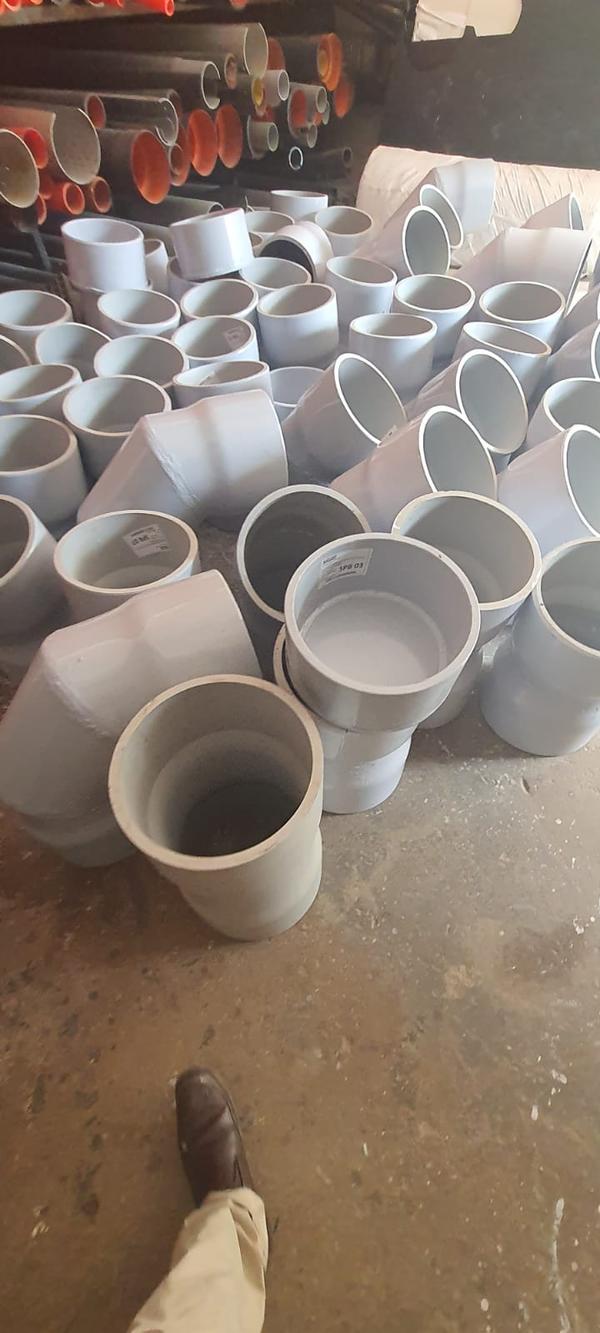
✅ PVC Fabricated Fittings – Applications PVC Fabricated Fittings are custom-made or large-diameter pipe fittings made by welding, machining, or assembling standard PVC components (like segments of pipe, flanges, or molded parts). These fittings are essential for non-standard, large, or complex pipeline configurations, especially in industrial, infrastructure, and municipal systems. 🏭 1. Industrial Piping Systems Use: Handling water, chemicals, and industrial effluents. Applications: Process piping Cooling water circulation Acid/alkali transfer lines Why Fabricated PVC? Can be customized for large diameters (often > 315 mm) Excellent chemical resistance Smooth flow path with reduced friction losses 💧 2. Water Treatment Plants Use: Water conveyance, filtration header systems, backwash lines. Why? Non-corrosive and low maintenance Suitable for chlorinated water and treatment chemicals 🚰 3. Sewerage & Drainage Networks Use: Fittings for underground sewage systems where molded options are limited. Why? Available in large diameters (upto 1000 mm or more) Leak-proof with correct solvent or butt-welding 🌾 4. Agriculture & Irrigation Use: Mainline irrigation fittings, valve chambers, flow dividers. Why? Custom-made to match large-scale irrigation system layouts UV-resistant grades available for outdoor use 🏢 5. Infrastructure & Building Drainage Use: Roof drain headers, rainwater harvesting systems, underground stormwater connections. Why? Tailored to site-specific layouts Strong mechanical structure for buried installations 🌉 6. Dams, Canals & Water Supply Projects Use: Large PVC pipe fittings for connecting intake/outlet structures. Why? Fabrication allows unique geometries (offsets, long-radius bends) Saves cost compared to metal alternatives 🔬 7. Chemical Handling Systems Use: Acid dosing lines, alkali waste disposal, chemical tank connections. Why? Fabricated to fit complex layouts and multiple tanks High resistance to aggressive media

68179d65be22ee500d53ff54 Card 2

product image
PIPELINE

We specialize in delivering innovative and reliable pipeline construction solutions for a diverse range of industries, including oil and gas, water distribution, and infrastructure development. Established in 2014 our company has built a reputation for excellence in design, engineering, and execution, ensuring projects are completed safely, on time, and within budget.

68179d65be22ee500d53ff54 Card 2

product image
PIPELINE

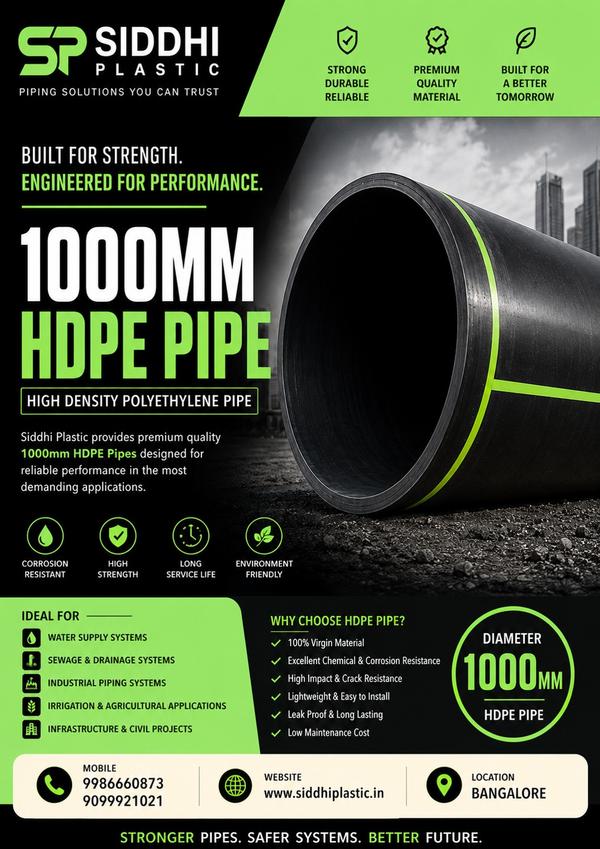
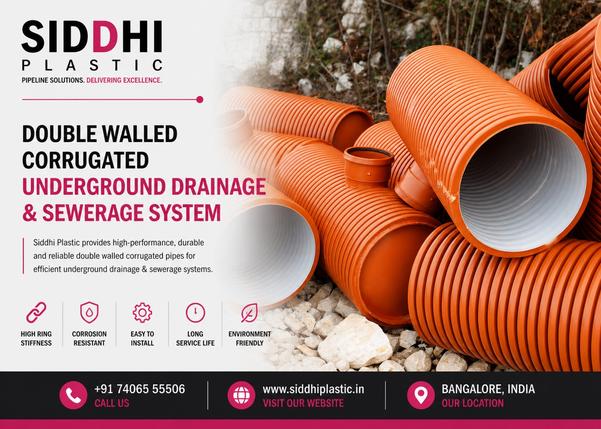
DWC (Double Wall Corrugated) Pipes are widely used across various sectors due to their strength, flexibility, light weight, and corrosion resistance. Here's a detailed overview of DWC Pipe Applications: 1. Electrical & Telecom Cable Protection Purpose: Protection of underground electrical and fiber optic cables. Why DWC? High mechanical strength Crush-resistant Flame retardant (for electrical grade pipes) Common Sizes: 40mm to 200mm (ID) Standards: IS 14930, TEC specs for telecom ducting ✅ 2. Sewerage & Drainage Systems Purpose: Gravity-based underground wastewater and stormwater management. Why DWC? High ring stiffness (SN4, SN8) Smooth inner wall ensures better flow Corrosion and chemical resistance Common Sizes: 100mm to 1000mm (ID) Standards: IS 16098 Part 2, ISO 21138, EN 13476 ✅ 3. Stormwater Drainage Purpose: Conveyance of rainwater in urban areas, highways, airports. Why DWC? Lightweight for easy installation Long service life Leak-proof joints ✅ 4. Culverts & Cross Drainage Works Purpose: Small to medium span crossings for roads and railways. Why DWC? Durable alternative to RCC and metal pipes Resistant to erosion and abrasion ✅ 5. Ventilation Ducts / Industrial Air Ducting Purpose: Airflow ducts in industrial or mining setups. Why DWC? Easy to handle and install Resistant to chemical fumes ✅ 6. Agricultural Drainage Purpose: Subsurface water drainage from farmlands. Why DWC? Available with perforations Lightweight and corrosion-free Used in: Waterlogged or irrigated lands ✅ 7. Railway & Highway Cable Ducting Purpose: Housing signaling and communication cables. Why DWC? UV-stabilized Can withstand load from heavy traffic above ✅ 8. Industrial Waste & Effluent Disposal Purpose: Disposal of non-pressurized industrial effluents. Why DWC? Chemically inert to many industrial wastes Long-term durability

68179d65be22ee500d53ff54 Card 2

product image
PIPELINE

✅ PVC Pipe Applications 🔧 1. Plumbing and Water Supply Use: Conveying cold water in buildings and homes. Why PVC? Corrosion-resistant Lightweight and easy to install Cost-effective alternative to metal pipes Common Types: uPVC (Unplasticized PVC), CPVC (Chlorinated PVC) 🚰 2. Drainage and Wastewater Systems Use: Residential and commercial drainage, soil waste, and rainwater systems. Why PVC? Smooth interior reduces blockages Resistant to chemicals and sewage gases Long lifespan with minimal maintenance 🌾 3. Agriculture and Irrigation Use: Irrigation systems, water distribution to crops, drip irrigation lines. Why PVC? UV and weather resistant (with appropriate formulation) Compatible with various irrigation systems Common Types: PVC-O (oriented PVC), uPVC 🏭 4. Industrial Applications Use: Transporting chemicals, industrial wastewater, and compressed air. Why PVC? High chemical resistance Available in pressure-rated grades Common in: Chemical plants, food and beverage, pharmaceutical industries 🏠 5. Electrical Conduit Use: Protection of electrical wiring in homes, buildings, and industries. Why PVC? Flame retardant properties Safe, insulating material Resistant to rodents and corrosion Common Types: uPVC conduit pipes (IS 9537 standard) 🚜 6. Sewerage Systems Use: Underground non-pressure waste water conveyance. Why PVC? Leak-proof joints Easy handling and installation Resistance to root intrusion 💨 7. Ventilation and HVAC Use: Low-pressure ventilation systems for air distribution. Why PVC? Lightweight, easy to fabricate Corrosion-resistant 🛢 8. Cable Ducting (Telecom & Fiber Optics) Use: Underground ducting for telecom and fiber cables. Why PVC? Smooth bore prevents cable damage Durable and weather-resistant 🚧 9. Infrastructure Projects Use: Water mains, culverts, road drainage, and underground cabling. Why PVC? High strength-to-weight ratio Quick installation reduces project time 💧 10. Rainwater Harvesting Use: Collecting and channeling rainwater from rooftops to storage tanks. Why PVC? Inexpensive, rust-proof Suitable for long-term exposure to sunlight and rain

68179d65be22ee500d53ff54 Card 2

product image
PIPELINE

✅ CPVC Pipes & Fittings – Applications CPVC (Chlorinated Polyvinyl Chloride) pipes and fittings are designed for higher temperature and pressure conditions compared to regular PVC. They are commonly used in residential, commercial, and industrial piping systems. 🏠 1. Hot and Cold Water Plumbing (Residential & Commercial) Use: Distribution of hot and cold potable water. Why CPVC? Can withstand high temperatures (up to 93°C / 200°F) Corrosion-free, hygienic, and safe for drinking water Long life (>50 years under normal conditions) Common Settings: Homes, apartments, hotels, hospitals, office buildings 🛠️ 2. Industrial Liquid Handling Use: Transport of mildly corrosive liquids, hot water, and chemicals in light industrial environments. Why CPVC? Chemical resistance to acids, alkalis, salts Suitable for process water, chilled water, and cooling systems Common Settings: Food processing units, chemical plants, pharmaceutical facilities 🏢 3. Commercial Buildings Use: Centralized hot and cold water systems. Why CPVC? Lower thermal conductivity than metal (less heat loss) Lower installation costs (no welding, threading, or flame) Applications: Shopping malls, office complexes, hospitals, schools 🔥 4. Fire Sprinkler Systems (CPVC-FS) Use: CPVC fire-rated pipes are used in wet sprinkler systems. Why CPVC? Complies with fire safety standards (UL listed, FM approved) Quick and easy installation with solvent cement Used in: Low-rise buildings, commercial spaces, hotels 🌡️ 5. Solar Water Heating Systems Use: Distribution of hot water from solar heaters to usage points. Why CPVC? Withstands high temperature fluctuations Resistant to scaling, unlike metal pipes 🌾 6. RO and Water Purification Plants Use: Transporting processed water in filtration systems. Why CPVC? Non-toxic, corrosion-resistant Doesn’t impart taste or odor to water 🏭 7. HVAC and Cooling Systems Use: Chilled water lines and air-conditioning drainage. Why CPVC? Lightweight alternative to GI/metal pipes Low thermal expansion

68179d65be22ee500d53ff54 Card 2

product image
PIPELINE

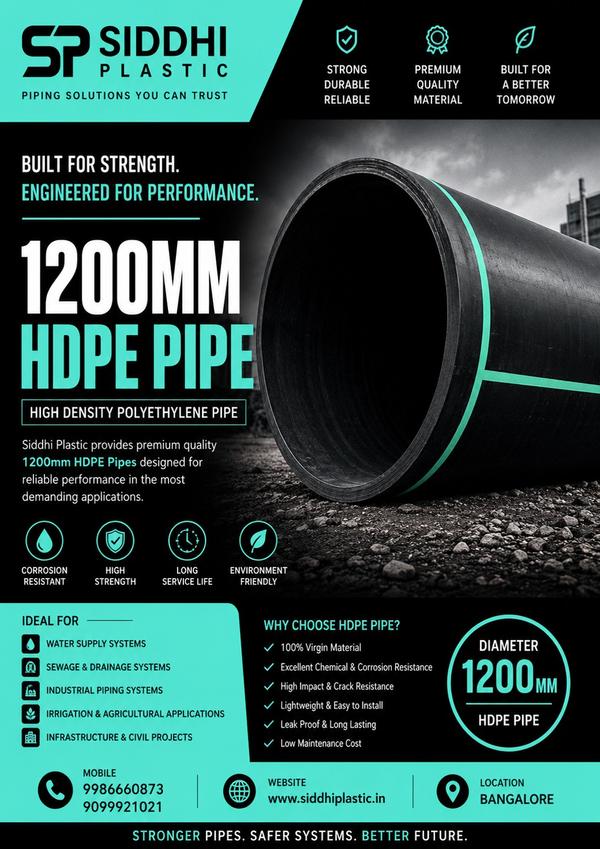
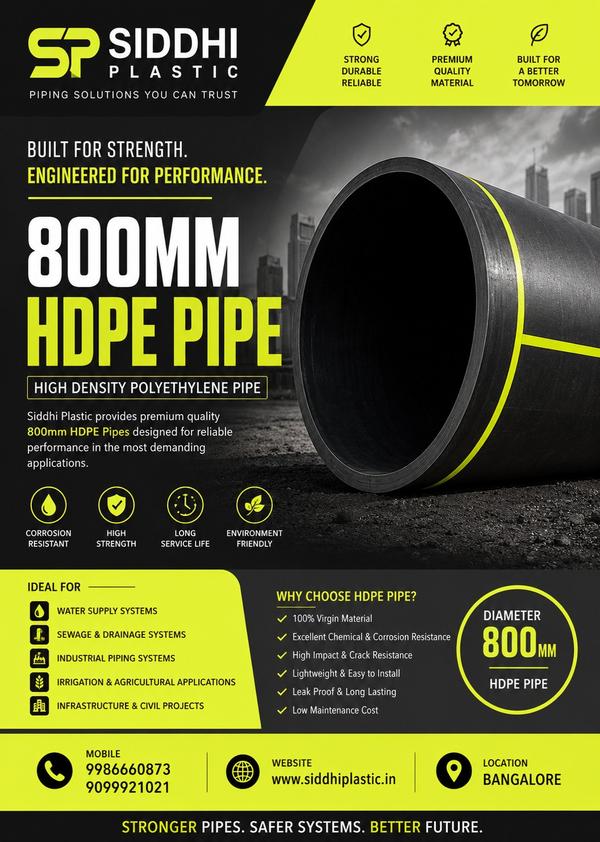
✅ HDPE Pipe Applications HDPE pipes are known for their flexibility, durability, corrosion resistance, and long service life. They are widely used in water, gas, sewage, industrial, and infrastructure applications. 💧 1. Potable Water Supply Use: Distribution of drinking water in urban and rural areas. Why HDPE? Non-toxic, safe for potable water Leak-free joints (butt fusion/welded) UV-stabilized and weather-resistant Common Standards: ISO 4427, IS 4984 🔥 2. Gas Distribution Use: Low-pressure natural gas and LPG distribution networks. Why HDPE? High impact resistance Excellent sealing (electrofusion and butt fusion joints) Note: Special yellow or orange HDPE used for gas pipelines 💦 3. Irrigation & Agriculture Use: Main and lateral pipelines in drip/sprinkler systems. Why HDPE? Flexible and easy to install on uneven terrains Resistant to agricultural chemicals and fertilizers 🚽 4. Sewerage & Drainage Use: Gravity-based and pressurized sewage and stormwater systems. Why HDPE? Excellent chemical and abrasion resistance Long service life (>50 years) Available as solid-wall or double-wall corrugated (DWC) 🏭 5. Industrial Effluent & Chemical Transport Use: Transport of corrosive liquids, slurries, and industrial wastewater. Why HDPE? High chemical resistance (acids, alkalis, salts) Suitable for process and waste pipelines 🌉 6. Infrastructure Projects Use: Culverts, bridge crossings, cable ducting, and utility tunnels. Why HDPE? Lightweight and easy to install in difficult conditions Flexible enough to withstand ground movement 🛢 7. Oil & Gas Sector Use: Transport of crude oil, slurry lines, and tailings disposal. Why HDPE? Resistant to hydrocarbons (with specific grade) High durability under harsh environments 🌍 8. Geothermal & Renewable Energy Systems Use: Underground heat exchange piping systems. Why HDPE? Excellent thermal stability and flexibility Long lifespan underground 🧪 9. Mining Applications Use: Slurry lines, tailings transport, dewatering, and ventilation. Why HDPE? Handles abrasive slurries and high pressures Can be coiled and fused easily on-site 🏠 10. Cable Protection (Conduits) Use: Protection for underground power and communication cables. Why HDPE? High tensile strength Smooth internal bore minimizes cable damage

68179d65be22ee500d53ff54 Card 2

product image
PIPELINE

✅ PPH Pipes & Fittings – Applications PPH (Polypropylene Homopolymer) pipes and fittings are highly resistant to chemicals and high temperatures, making them ideal for demanding industrial and chemical process applications. 🏭 1. Chemical Industry Use: Transport of corrosive chemicals and industrial fluids. Why PPH? Excellent resistance to acids, alkalis, and solvents Non-reactive even with aggressive chemicals Applications: Acid pickling lines Chemical dosing and storage tank connections 🔧 2. Industrial Process Piping Use: Fluid and gas handling in manufacturing processes. Why PPH? High mechanical strength Withstands thermal and mechanical stress Common in: Chemical plants, oil refineries, textile and paper industries 💧 3. Water & Wastewater Treatment Plants Use: Conveying treated water, sludge, and chemicals like chlorine, alum, lime, etc. Why PPH? Resistant to aggressive disinfection chemicals Smooth inner surface prevents scaling and biological growth 🔬 4. Pharmaceuticals & Laboratories Use: Piping for pure water, waste, and chemical lines in labs and pharma plants. Why PPH? High purity – doesn't leach contaminants Sterilizable and suitable for clean applications 🌡️ 5. Hot & Cold Water Systems Use: Conveying hot process water up to ~95°C continuously. Why PPH? Higher temperature resistance than standard PP-R Excellent long-term thermal performance 🌾 6. Agriculture & Fertilizer Industry Use: Fertilizer transfer lines, spraying systems, pesticide delivery. Why PPH? Corrosion-proof, long-lasting in fertilizer and pesticide-rich environments 🛢 7. Electroplating & Surface Treatment Plants Use: Acid and alkali distribution, rinse lines, ventilation. Why PPH? Resistant to fumes and vapor corrosion Compatible with polypropylene tanks and systems

68179d65be22ee500d53ff54 Card 2

product image
PIPELINE

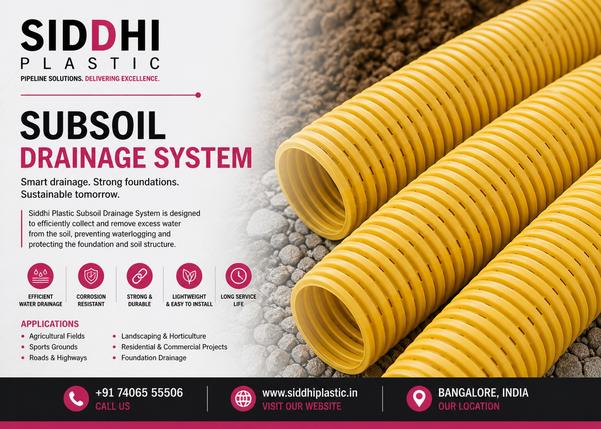
✅ DWC Perforated Pipe Applications DWC (Double Wall Corrugated) Perforated Pipes are specially designed pipes with small perforations (holes) on their surface, used mainly for subsurface drainage and water management systems. These pipes have a corrugated outer wall for strength and a smooth inner wall for better flow, and the perforations allow water to enter the pipe from the surrounding soil or structure. 🌾 1. Subsurface Drainage (Agriculture & Landscaping) Use: Removing excess water from root zones to prevent waterlogging. Applications: Agricultural fields (crop drainage) Golf courses Sports grounds Greenhouses Why DWC Perforated? Allows water ingress through perforations Flexible and easy to install in trenches Resistant to soil chemicals and corrosion 🛣 2. Highway & Road Drainage Use: Subsurface drainage beneath highways, roads, embankments, and pavements. Why? Prevents water accumulation under roads, which causes cracking and failure Withstands heavy loads with appropriate bedding 🏗 3. Building Foundation & Basement Drainage Use: Perimeter drainage systems to remove groundwater near basements and foundations. Why? Protects building structure from water damage Compatible with waterproofing membranes and geotextile wraps 🏞 4. Stormwater Management & Recharge Systems Use: Infiltration and collection of stormwater in retention and recharge systems. Why? Collects water efficiently through perforations Can be connected to soak pits, recharge wells, or storm drains 🛤 5. Railway Track Drainage Use: Water drainage under ballast layers of railway tracks. Why? Prevents water retention which weakens the track bed Long lifespan under harsh outdoor conditions 🧱 6. Retaining Wall Drainage Use: Behind retaining walls to relieve hydrostatic pressure. Why? Safely channels water away, maintaining wall stability Reduces erosion and structural strain 🌍 7. Landfill & Solid Waste Projects Use: Leachate collection and gas venting systems. Why? Chemically inert Flexible enough to adapt to landfill settlement ✅ Key Features of DWC Perforated Pipes Material: HDPE (commonly), UV stabilized Sizes Available: 100 mm to 1000 mm OD (customizable) Perforation Type: Half-perforated or fully perforated (custom patterns) Standards: IS 16098, ASTM F405, ISO 21138 (for drainage systems) Lifespan: >50 years in normal soil and weather conditions 📋 Advantages Lightweight and easy to handle High ring stiffness (SN4/SN8) Excellent chemical and corrosion resistance Fast installation with push-fit couplers Suitable for both temporary and permanent drainage systems

68179d65be22ee500d53ff54 Card 2

product image
PIPELINE

✅ PVC Perforated Pipe Applications PVC perforated pipes have uniformly spaced holes or slots along their surface, allowing liquid to enter or exit the pipe. These are primarily used for drainage, filtration, and water distribution applications. They are made from unplasticized PVC (uPVC) or flexible PVC, depending on the requirement. 🌾 1. Subsurface Drainage (Agricultural Fields) Use: To drain excess water from soil, improving crop health and root oxygenation. Why PVC? Corrosion-free and lightweight Easy to install in long runs Maintains consistent perforation pattern for even drainage 🛣 2. Road & Highway Drainage Use: Subsurface drainage below roads, pavements, and embankments. Why? Prevents water accumulation under road surfaces Reduces chances of road damage due to water ingress 🏗 3. Building & Basement Drainage Use: Around foundations to relieve hydrostatic pressure and channel groundwater away. Why PVC? Durable in underground environments Doesn’t react with soil or moisture Typical Placement: Along perimeter footing or retaining wall trenches 🧱 4. Retaining Wall Drainage Use: Installed behind retaining walls to manage water accumulation and prevent wall failure. Why? Allows collected water to escape easily through perforations Prevents buildup of hydrostatic pressure 🏞 5. Landscape & Garden Drainage Use: To maintain healthy turf and prevent waterlogging in gardens, parks, golf courses, and sports fields. Why? Flexible routing around landscape contours Works well with gravel backfill or geotextile wraps 🌧 6. Stormwater Harvesting / Recharge Systems Use: Perforated PVC pipes are used in soak pits, percolation trenches, or rainwater recharge systems. Why? Allows water to seep into surrounding soil Helps with groundwater recharge and flood mitigation 🧪 7. Leachate Collection in Waste Treatment Use: In solid waste landfills or septic systems to collect leachate or filtered liquids. Why? Chemical and biological resistance Can be used with filtration layers or sand beds 🌍 8. Filtration and Sand Drainage Systems Use: In drainage trenches or filter beds. Why? Prevents clogging when wrapped with geotextile Used in combination with coarse gravel or sand 🔧 Common Features of PVC Perforated Pipes Feature Details Material uPVC or flexible PVC Perforation Types Round holes, slots (longitudinal), or custom Pipe Diameter Typically 75mm to 300mm Length Usually 3m or 6m sections Color White, grey, or custom (based on use) Customization Fully or half-perforated, based on application ✅ Advantages Corrosion and chemical resistance Long service life High flow capacity due to smooth inner surface Compatible with geotextile wraps to prevent clogging Light weight – easy to transport and install

Phone Number

08042781646

Please keep 0 before dialling the number.

Email Address bhavik@siddhipipe.com

Mon-Thu: 10 AM - 2 PM • Fri: 3 PM - 7AM

Address No. 20, Block No 4, 1st Main Road, 2nd Cros Sankranthi Industrial Estate, Outer Ring Rd, Pantarapalya, Bengaluru, Karnataka.

Bengaluru, India, 560085